North Georgia before the
Civil War
While prosperous planters controlled antebellum Georgia, for the
most part north Georgia was home to farmers and merchants. These men had little
time for leisure or academics and were overly middle-class. In the northern part
of the state, only in Athens and
Rome did an aristocracy
form, and it was composed of a few planters and merchants. Among whites the
illiteracy rate was 20 percent.
Starting in the 1830's an economic boom
spurred growth throughout much of the north Georgia area. Railroads began to
move cargo in the area in 1833 and the state completed a
Chattanooga to
Atlanta (formerly
Marthasville) link in 1850. Textile mills sprang up across the area as the
railroads were built. A severe depression following the Panic of 1837 and
stretching into the mid-1840's delayed the growth of the area, but by 1860
Georgia had 1200 miles of track and the best rail system in the deep South.
Although largely regarded as an
agricultural area, North Georgia also had numerous tanneries, brickworks, and
iron foundries. Gold,
discovered in 1828 in present-day
White County and
later in the area around
Dahlonega (Lumpkin
County), supported mining operations that were so productive that the United
States built a mint in
the town in 1838. Iron, clay, coal and marble were also taken from the ground.
Large cotton mills developed in Roswell and in
Manchester The larger
cities of the time included Ringgold, a warehouse district south of Chattanooga
(History of Chattanooga), Cassville, a
major cultural center until destroyed by Sherman during the War for Southern
Independence, and Athens, home to the University of Georgia.
Slavery in North Georgia
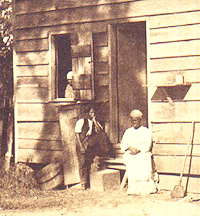 Many misconceptions exist about the institution of slavery in North Georgia. One
is that a significant number of North Georgians owned slaves. The most accurate
figure is about 7% of North Georgians owned slaves at the time of the Civil War.
That percentage was significantly lower (3%) in the mountains of North Georgia,
and higher in the eastern piedmont area (almost 10% in some places). Only in the
larger cities of Rome,
Athens, and
Lawrenceville did ownership exceed 10%. Slaves were a sign of wealth. Most
slaves were owned by planters and, to a much less extent, professionals.
Many misconceptions exist about the institution of slavery in North Georgia. One
is that a significant number of North Georgians owned slaves. The most accurate
figure is about 7% of North Georgians owned slaves at the time of the Civil War.
That percentage was significantly lower (3%) in the mountains of North Georgia,
and higher in the eastern piedmont area (almost 10% in some places). Only in the
larger cities of Rome,
Athens, and
Lawrenceville did ownership exceed 10%. Slaves were a sign of wealth. Most
slaves were owned by planters and, to a much less extent, professionals.
In coastal Georgia and on the piedmont
plantations most menial tasks were performed by black slaves. In the mountains
of north Georgia similar tasks were completed by the large amount of Scot and
Irish farmers, displaced during the brutal Panic of 1837. These workers, who
lack a title, are sometimes called indentured servants, however, they lacked a
term of service. Cherokee who were left behind during the
Trail of Tears were also
used to complete the tasks that a black slave might perform in coastal and
piedmont areas of Georgia.
Georgia had been slave-free until 1750
when Joseph Habersham and two pastors pushed for admitting slaves to the
fledgling colony. Habersham, a teacher, later became acting governor of the
state in the early 1770's. Although a number of Cherokee (most notably Chief
James Vann,
Major Ridge, and
John Ross) owned slaves,
introduction of black slavery to North Georgia was much slower than to the
eastern coast of the state. Generally, settlers did not farm the land here until
after 1830, and there were large areas that were not farmed.
|
|
|
|
|
|
|
|
|
|
|
|
|
|
|
|
|
|
|
|
|
|
|
|
|
|
|
|
|
|
|
|